Spatial design
Most brands fit out a permanent shop before knowing whether the location works. The reverse order costs less, and gives a much better plan.
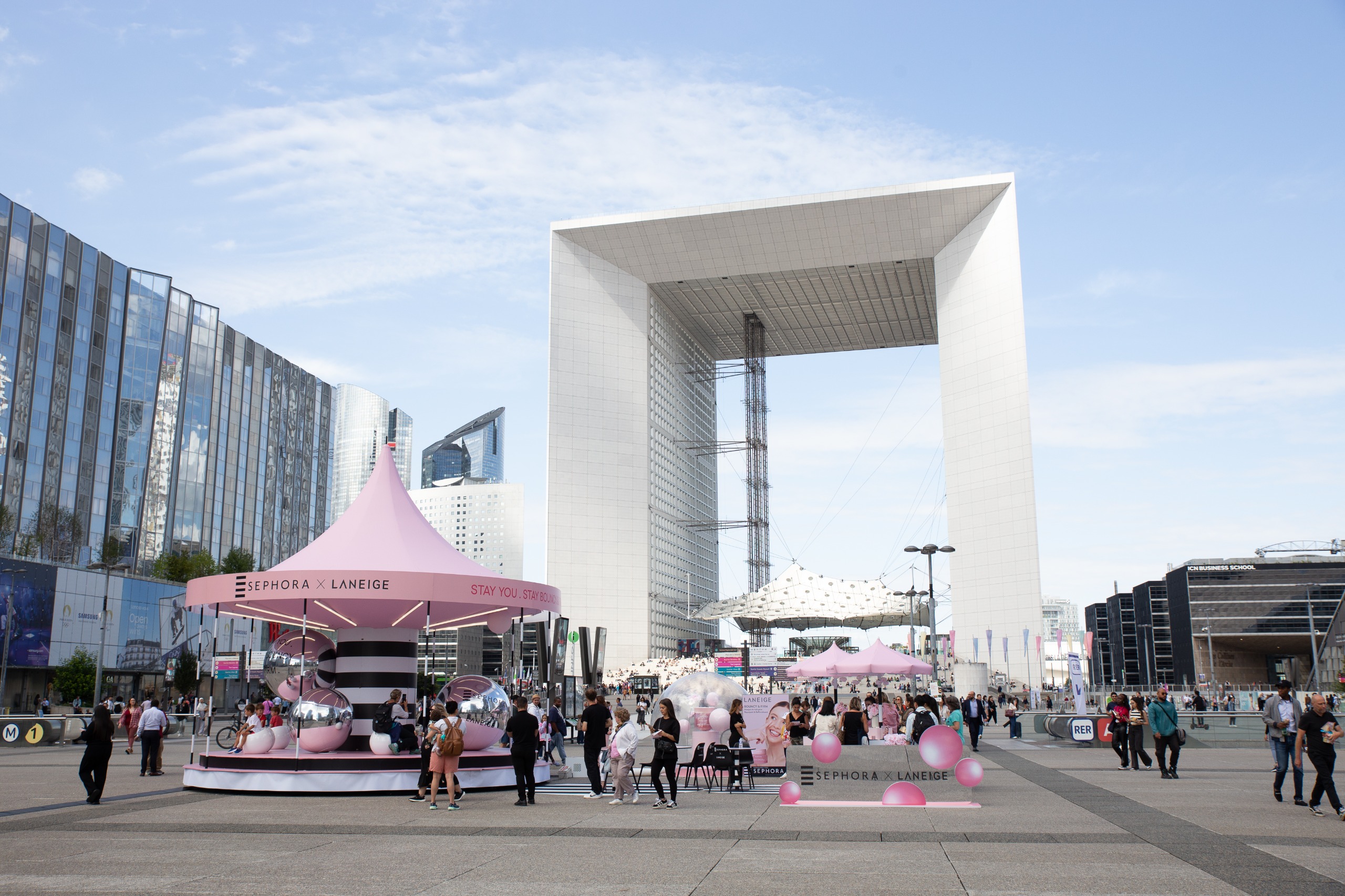
Temporary first, permanent second
A permanent fit-out commits a heavy budget to unverified assumptions: the right location, the right journey, the right product range. A temporary operation of a few weeks costs a fraction of that sum and answers the same questions with real figures: footfall at the door, areas where people stop, average basket, products that do not sell.
Working with the same team on both stages avoids starting again from scratch. What was observed in the temporary shop ends up in the plan of the permanent one, instead of being lost at dismantling. The C'est mon Donuts shop, opened in five weeks on rue de Linois in Paris, came out of that logic: see the project.
A fit-out is judged by what it gets people to do
The height of a table, the position of the counter, the lighting on a product wall: every fit-out decision raises or destroys conversion. The right method starts from the shop floor rather than the plan: where customers stop, what they look at, what they do not understand, the questions that keep coming back, the moments when they need to be guided.
That is where an advice point becomes useful, and stops being just a counter. A well laid out space helps visitors understand why they are there.
Our scope
- Concept and plans: zoning, customer journey, technical drawings and 3D, choice of materials.
- Bespoke furniture: counters, podiums, shelving, fitting rooms, made in our partner workshops in France.
- Reuse: recovery and restyling of existing elements when it serves the project rather than the quote.
- Site management: coordination of electrics, painting, flooring, shop sign. A single point of contact, a single opening date.
- Compliance: accessibility, fire safety, technical file when the premises are open to the public.
- Merchandising: product layout, signage, opening window display.
The second shop is decided in the first
We often meet founders who have made a first point of sale work and want to open a second. The difficulty that keeps coming back is almost never the fit-out: it is the organisation. In the first shop, the founder is still everywhere. They welcome, correct, motivate, catch what slips.
Duplicating a concept is easy. Duplicating a level of execution is much less so. A fit-out planned for a network is therefore designed differently: reproducible furniture, plans that can be reused from one site to the next, standards that non-founder teams can hold.
For a temporary operation, see the pop-up store agency. For a space inside a host store, thecorner and shop-in-shop. For manufacturing the furniture, it is here.
Frequently asked questions
What we are asked most often about this service.
How much does it cost to fit out a shop?
Allow €800 to €2,500 per m² depending on the level of finish, excluding structural work. An 80 m² shop with bespoke furniture generally comes in between €80,000 and €180,000. The detailed costing is done at concept stage, once the premises have been visited: the existing condition moves the budget more than the choice of materials.
How long does the fit-out work take?
4 to 10 weeks on site depending on the condition of the premises, after 4 to 6 weeks of design and manufacturing. We manage all the trades to hold the opening date, which is almost always the non-negotiable constraint.
Should you open a pop-up before your first shop?
Often, yes. A pop-up of a few weeks costs a fraction of a permanent fit-out and answers the questions that cost a lot later: does the location really work, what average basket, which hot spots, which product range. Those lessons then feed directly into the plan of the permanent shop.
Do you work with brands opening their first shop?
It is a core part of the job: more than 23 online-born brands supported in their move into physical retail, often first with a temporary shop to test, then a permanent one.
Can you reuse existing furniture?
Yes, and it is often a good idea. We have delivered convincing projects by restyling reclaimed display cases rather than building new. Reuse lets you concentrate the budget where the customer looks, without sacrificing the consistency of the whole.